People & organisational effectiveness
Aligning structure, roles, competencies, performance and accountability.
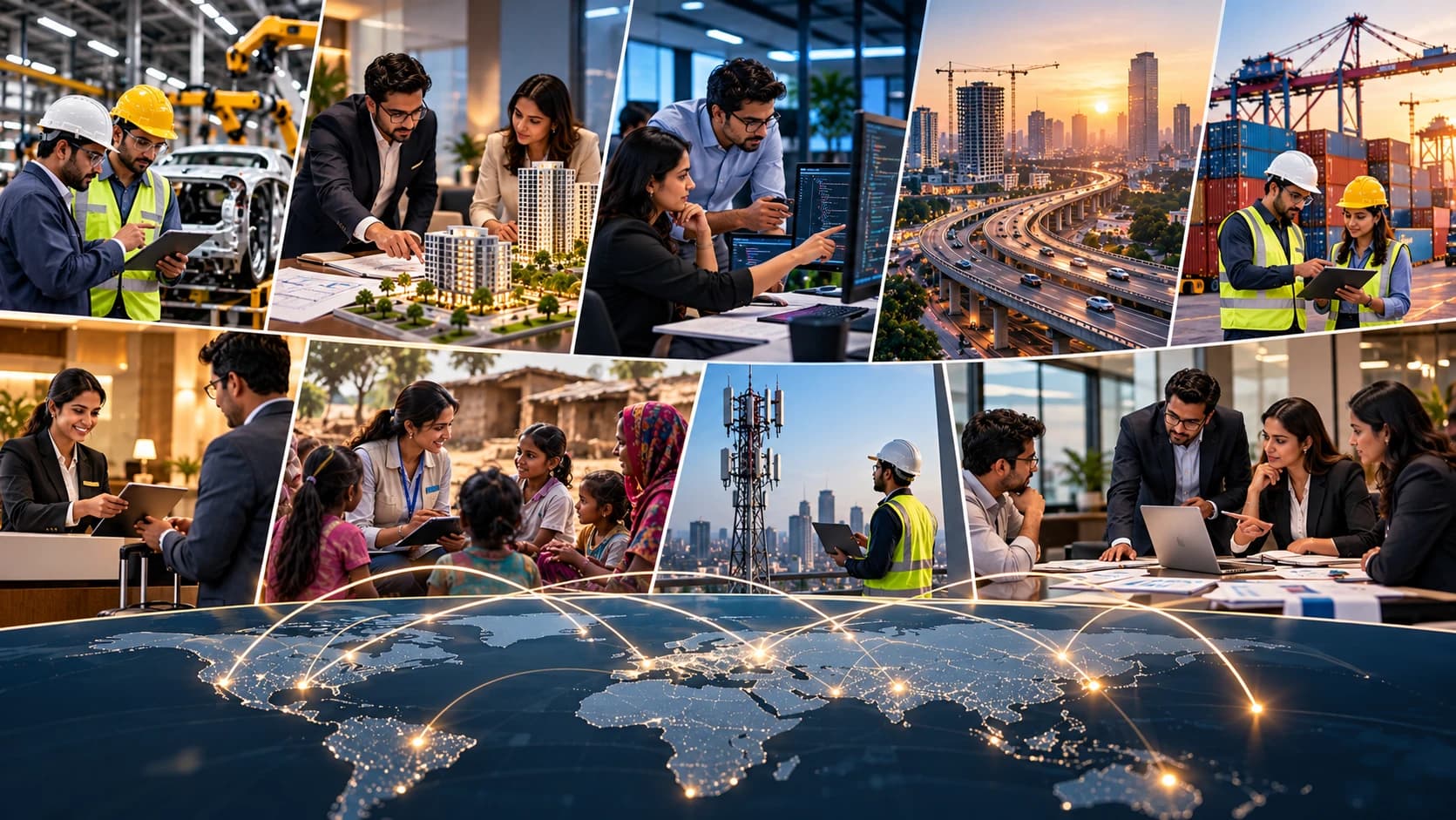
Every industry carries its own regulatory, operational and talent pressures. We bring an integrated view of people, process, technology and strategy to each of them.
The MICE industry (meetings, incentives, conferences and exhibitions) has changed significantly over the past 8–10 years, driven by the growth of corporate events and incentive travel, the shift to hybrid and virtual formats, rising venue and travel costs, sustainability expectations and clients' demand for measurable returns on event spending. Event organisers and destination management companies must deliver complex, time-bound projects that involve venues, hotels, airlines, vendors, technology partners and on-ground teams, often across multiple cities and countries. Seasonal and project-based workloads, heavy reliance on freelance and contract staff, tight margins, last-minute client changes and fragmented coordination between sales, operations, procurement, finance and on-site teams can result in cost overruns, vendor disputes, delayed collections and inconsistent client experiences.
Our integrated consulting services help MICE organisations build scalable operating models by aligning organisational structure, project roles, workforce planning for peak seasons, vendor and procurement processes, event costing and budgeting, and client servicing workflows. We support the establishment of standard operating procedures, event-wise profitability tracking, KRAs and KPIs for sales and operations teams, and technology-enabled systems for proposals, bookings, vendor management, on-site execution, billing and post-event reporting.
Transforming a Conference Management Company from Constant Firefighting to a Process-Driven Organization
The client was a company specializing in organizing international conferences across the United States, Europe, and the Middle East within a niche domain. Despite operating in an international market, the organization faced persistent challenges in hiring, retaining, and managing employees. Internal management issues, inconsistent operational practices, and difficulties in maintaining statutory compliance were affecting the company's ability to function smoothly and focus on its core business.
An assessment of the organization revealed significant gaps in its management systems, policy framework, and operational procedures. The absence of clearly defined policies and standardized processes resulted in inconsistent decision-making and an overdependence on individuals to manage routine activities. Government regulations and statutory compliance presented additional challenges, with recurring issues disrupting normal business operations.
The organization lacked a structured framework to guide employees and managers in carrying out their responsibilities. Without clear policies, documented procedures, and defined accountability, even routine operational activities required considerable management intervention. This affected productivity, created uncertainty among employees, and diverted management attention from strategic and business-critical priorities.
The organization was operating in a state of constant firefighting, with management repeatedly addressing immediate issues rather than focusing on long-term business development. In the absence of a formal policy framework, routine tasks were frequently treated as individual projects, consuming time and resources that could have been allocated more effectively.
Employee management, operational coordination, and statutory compliance required a more systematic approach. The company needed to establish clear guidelines, improve consistency in implementation, and create an environment in which employees could perform their responsibilities independently within a defined organizational structure. The central challenge was to move away from informal, person-dependent practices and establish a sustainable, process-driven operating model.
HHRS undertook a comprehensive organizational strengthening initiative focused on developing a structured policy framework and standardizing internal processes. New policies were designed for areas where no formal guidelines existed, while existing policies were reviewed and modified to align with the Indian business and regulatory context.
The emphasis was not limited to drafting documents; it extended to implementation and practical adoption across the organization. Policies were introduced to provide employees and managers with clearer guidance on organizational expectations, responsibilities, and procedures. Feedback was collected from the team, and the policies were revised wherever necessary to improve their relevance and effectiveness.
HHRS also worked towards strengthening overall management practices, bringing greater structure to routine operations, and reducing the need for repeated management intervention. Over a period of 12 months, the initiative helped the organization transition from a people-dependent model to a process-dependent operating system, in which documented policies and established procedures provided a more consistent foundation for day-to-day functioning.
The transformation brought greater structure and consistency to the company's internal operations. With clearer policies and defined procedures in place, management was better positioned to make decisions, address operational issues, and guide employees. The structured framework helped reduce non-compliance and indiscipline issues while improving clarity around organizational expectations.
The improved systems also supported employee engagement and morale by providing a more organized and predictable working environment. As routine activities became more structured, management could devote greater attention to critical business priorities instead of repeatedly resolving avoidable operational problems.
By strengthening its internal processes, the company established a more stable foundation for managing its workforce, supporting international conference operations, and pursuing business growth. The shift towards a process-driven organization enabled better utilization of management time and resources, creating the potential for improved operational efficiency and profitability.
Sustainable business growth requires more than strong client relationships and market expertise; it requires robust internal systems. Through a structured policy framework, contextualized procedures, and implementation supported by employee feedback, HHRS helped the client move beyond constant firefighting and establish a more disciplined, consistent, and process-driven organization.
Our integrated approach
The objective is the same in every sector: system-driven, performance-oriented, technology-enabled operations with better productivity, control, cost efficiency and scalability.
Aligning structure, roles, competencies, performance and accountability.
Simplifying workflows, strengthening SOPs and eliminating operational bottlenecks.
Connecting systems, automating repetitive activities and improving management information.
Aligning strategy, leadership, organisation, processes and technology to deliver sustainable, measurable results.
Get in touch
Tell us where your organisation is today and where you want it to be. A senior specialist will get back to you.